

New York Becomes 11th State to Ban Most Credit Checks by Employers during Hiring Process
In New York employment law news, Gov. Kathy Hochul signed Senate Bill S3072 into law on December 19, 2025, amending the New York State Fair Credit Reporting Act to prohibit employers from reviewing most candidates’ and employees’ credit history while making hiring or compensation decisions. Modeled on New York City’s “Stop Credit Discrimination in Employment” act, the law brings these noteworthy restrictions to employers in Westchester, Rockland, and the rest of the state.
How the Law Treats Credit Checks and Employment Practices
Under the new law, it is now considered an unlawful discriminatory practice for an employer to request or use consumer credit history when making employment decisions. “Consumer credit history” refers to consumer credit reports, credit scores, or information obtained directly from the individual regarding credit accounts, payment history, charged-off debts, items in collections, credit limits or bankruptcies, judgments, or liens. The law will go into effect on April 18, 2026, giving employers 120 days after its signing to review current hiring practices, retrain staff, and update HR manuals to account for the amendment.
New York employers who staff multi-state teams must maintain anti-discriminatory hiring practices in accordance with the definitions of each state or jurisdiction in which their employees work. New York is now the 11th state to ban consumer credit checks for employment decisions, joining California, Colorado, Hawaii, Illinois, Maryland, Oregon, Vermont, and Washington. Several major cities (including New York City, Philadelphia, Washington D.C., and Chicago) also maintain jurisdictional restrictions to the same end.
Nevertheless, the scope of this amendment is not limited to New York employers. Because the law amends the New York Fair Credit Reporting Act (as opposed to Human Rights Law), any employer who is hiring or employs a resident of New York State must comply.
Exemptions for Positions of Public Trust, Security, or Signatory Power
Limited exemptions exist under this law. Employers may only request or review credit history for positions that require high degrees of public trust (including law enforcement or government roles with state-required background checks); involve security clearance considerations, whether state, federal, or private (like those relating to digital security systems and infrastructure); or if the individual has signatory power over $10,000 or more in third-party or employer funds or assets.
If the employer is required to obtain or consider credit information under state or federal law, or by a self-regulatory organization as defined by the Securities Exchange Act of 1934, then they are also statutorily exempt.
Recommended Actions for Westchester Employers
To prepare for the upcoming April deadline, employers should consider the following actions to bring hiring and employment practices into compliance with the new statute:
- Revise Background Check Forms: Remove credit check authorizations from standard job application packages unless the role meets a specific statutory exception.
- Train HR Personnel: Ensure hiring managers understand that even “informal” credit inquiries during interviews are now prohibited.
- Audit Exempt Positions: Document why specific roles are still subject to credit checks to prepare for potential Department of Labor audits.
These are just a few recommended actions and do not represent the full scope of necessary adjustments. A legal expert is best positioned to advise on how to stay compliant with labor laws in all states. Contact Bleakley Platt & Schmidt’s Employment Discrimination Practice Group to review how this amendment impacts your firm’s hiring and employment practices. As always, the best defense against allegations of employment discrimination is to implement policies that prevent it from occurring.
Read More
New York Breastfeeding Law: Paid Lactation Breaks Explained for Employers
New York State has amended its labor law to accommodate breastfeeding mothers in the workplace. As of last month, employers are required to provide paid breastfeeding breaks. This update to Section 206-c of the New York Labor Law creates significant changes to workplace breastfeeding policies and numerous considerations for compliance.
Changes to New York Breastfeeding Law for the Workplace
Previously, New York mandated that employers provide one unpaid break every three hours for nursing mothers to express breast milk. However, the recent amendment changes the equation:
- Paid Breaks: Employers must now provide up to 30 minutes of paid breastfeeding break time each time an employee needs to express breast milk. This applies for up to three years following childbirth.
- Flexibility: Employees can combine existing paid breaks or mealtimes with the allotted 30 minutes if their pumping needs exceed that timeframe.
- Discrimination Protection: The law explicitly prohibits employers from discriminating against employees for expressing breast milk in the workplace.
Resources and Compliance
The New York State Department of Labor (NYSDOL) has taken steps to ensure employers are aware of these changes:
- Updated FAQs: The NYSDOL FAQs address paid lactation breaks and clarify employers’ obligations.
- Revised Policy: The NYSDOL Policy on the Rights of Employees to Express Breast Milk in the Workplace has been updated and needs to be distributed to employees upon hire, annually, and upon returning from childbirth leave.
- Fact Sheets: Separate fact sheets on the amendment, one for employers and another for employees, are available on the NYSDOL website.
The NYSDOL emphasizes that employers must accommodate employees’ reasonable requests for breaks and acknowledges that the number of breaks needed can vary depending on the individual.
What New York Employers Should Do Now
Because of these changes, New York employers should consider the following:
- Review and Update Policies: Work with legal counsel to review and update existing lactation accommodation and leave policies to reflect the new paid breastfeeding break requirement.
- Employee Communication: Disseminate clear and accurate information to employees regarding the amended law. Consider providing training for managers and supervisors on handling employee requests for lactation breaks.
- Accommodation Strategies: Develop a plan for providing a clean and private space for expressing breast milk in the workplace. This could be a dedicated lactation room or a designated, private area.
Staying Compliant
By understanding these changes and taking proactive steps, New York employers can ensure compliance with the new breastfeeding amendment to the Labor Law. Bleakley Platt & Schmidt, LLP’s Labor & Employment Practice Group is experienced in navigating workplace regulations and can assist your company in developing compliant lactation break policies and practices.

NY Employment Law Trends: Nonresident Discrimination
The New York Court of Appeals recently broadened the scope of state anti-discrimination laws. The March 2024 decision in Nafeesa Syeed v. Bloomberg L.P. determined that non-resident job applicants can now pursue claims under the New York State Human Rights Law (NYSHRL) and the New York City Human Rights Law (NYCHRL) if they allege discrimination during the hiring process.
Background: The “Impact Test” and New York Anti-Discrimination Laws
Previously, New York courts applied an “impact test” to determine whether non-resident job applicants could sue under the NYSHRL and NYCHRL. Applicants needed to show how discrimination had a significant impact on their lives in New York.
The NYS Court of Appeals’ Syeed decision revisits this standard. Here, the Court determined that being denied a job opportunity in New York – even for an applicant who doesn’t currently live in the state – constitutes a sufficient impact to bring a claim. The Court reasoned that such discrimination deprives applicants of the “chance to work, and perhaps live, within those geographic areas.”
Review a summary of Syeed v. Bloomberg here.
Implications for NYS employers, especially those not subject to federal anti-discrimination laws
This decision presents new considerations for New York employers, particularly those with robust hiring practices that attract candidates from across the country. Here’s what you need to be aware of:
- Expanded Pool of Potential Claims: The Syeed decision widens the pool of potential claimants who now may be able to allege discrimination claims against potential employers. Hiring managers must have a valid, non-discriminatory reason for selecting or not selecting applicants for a particular position.
- Importance of Applicant Hiring and Interview Training: Regularly reinforcing anti-discrimination training for all personnel involved in hiring is crucial. This training should address appropriate job application and interview questions for applicants to ensure everyone involved understands how even simple questioning concerning an applicant’s family status, graduation dates, or time gaps in their resume may give rise to an inference of unlawful discrimination.
- Considerations for Remote Work: The Court currently limits its decision to positions that require physical presence in New York. However, employers with remote work opportunities should consult with employment law attorneys to stay updated on any further developments.
Staying Compliant with Employment Law Trends
The Syeed decision highlights the importance of staying informed about evolving employment law trends. At Bleakley Platt & Schmidt, LLP, our experienced employment discrimination attorneys can help your business with these complexities. We offer comprehensive guidance on hiring practices, compliance training, and legal representation against discrimination claims.
For further guidance or to discuss your specific situation, contact our employment law team today.
Read More
Employer Obligations Under NYC’s Workers’ Bill of Rights Policy
As of July 1, 2024, a new regulation will require New York City employers to prominently display and provide a copy of a Workers’ Bill of Rights to both current and new employees. NYC’s Workers’ Bill of Rights is being developed by the Department of Consumer and Worker Protection, in collaboration with various governmental agencies, community groups, and labor organizations. This initiative aims to ensure that employees, prospective employees, and independent contractors in New York City are well-informed about their rights under relevant federal, state, and local laws.
The Workers’ Bill of Rights, available on New York City’s official website, details the rights of employees, covering topics like unionization and rights applicable irrespective of immigration status. Once effective, employers will be required to distribute a copy of the Workers’ Bill of Rights to all employees. New employees must receive this document on or before the first day of work.
Employers will also be required to display the Workers’ Bill of Rights prominently in an area that is easily accessible and visible to all employees. If online platforms or mobile applications are frequently used by an organization to communicate with its workforce, the Workers’ Bill of Rights must also be accessible via these means.
The Workers’ Bill of Rights must be presented in English and any language spoken as a primary language by at least 5% of a company’s employees, provided New York City makes the document available in that language. The term “employee” includes any person who is employed in NYC for more than 80 hours per calendar year, whether the person is employed on a full-time, part-time, or transitional job program basis.
Failure to comply with these regulations may result in a civil penalty of $500. However, for the first violation, employers will be given a notification and a 30-day grace period to rectify the non-compliance.
Employers are urged to familiarize themselves with the upcoming requirements. To ensure compliance and avoid penalties contact Joseph DeGiuseppe of Bleakley Platt & Schmidt’s Labor and Employment Practice Group at 914-287-6144 or jdegiuseppe@bpslaw.com.
Read More
New York State’s Captive Audience Law Explained
Within a day of its arrival on her desk, Governor Hochul enacted New York’s “Captive Audience Law” (S4982/A6604), amending Section 201-D of the NYS Labor Law. The main purpose of this law is to prevent employers from taking punitive actions against non-managerial employees who do not attend company-sponsored meetings intended to convey the employer’s stance on religious or political matters (so called “captive audience” meetings). This is significant because the new law broadly defines “political matters” to encompass organized labor, particularly decisions related to supporting or joining labor organizations. In effect, employers in New York State are now barred from requiring that employees attend meetings intended to discourage unionization.
The passage of this law marks a significant deviation from the rights of employers to engage in speech protected by Section 8(c) of the National Labor Relations Act. The NLRA regards mandatory, “captive audience” meetings as a form of protected employer speech under Section (c) – provided management does not use threats, promises of benefits, or punishment to discourage employee unionization. “Captive audience” speeches, however, are prohibited by the NLRB within 24 hours of a union representation election.
By contrast, the New York law makes it illegal for employers to refuse to hire, employ, or license non-managerial workers for choosing not to attend meetings, listen to speech, or view communications primarily intended to express the employer’s religious or political views, including unionization. Protected employees also may not be discharged or discriminated against regarding terms of employment for having declined to attend an employer’s “captive audience” meeting. Review the law in its entirety, here.
New York joins Connecticut, Maine, Minnesota, and Oregon in banning mandatory “captive audience” meetings. While this indicates a growing national trend, legal challenges are emerging around whether these bans conflict with Section 8(c) of the NLRA, highlighting the complex legal landscape surrounding this issue.
Bleakley Platt & Schmidt’s Labor & Employment Law Practice Group is prepared to counsel New York employers on compliance with this new law and will continue to monitor this legal trend on both the NYS and national level. To learn more, contact Joseph DeGiuseppe, Jr, at jdegiuseppe@bpslaw.com.
Read More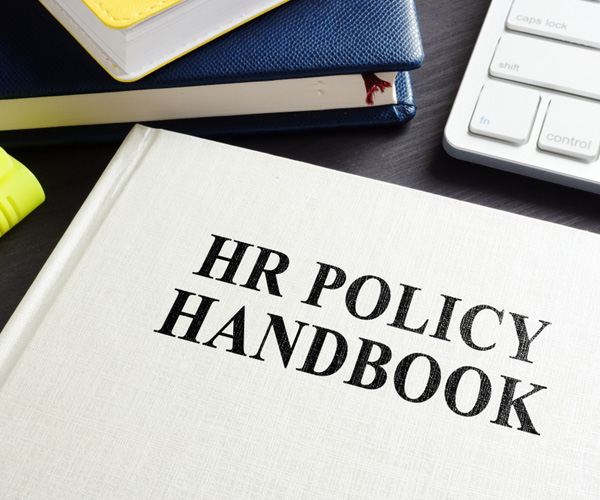
How Employers Can Comply with NLRB’s Stericycle Inc. Decision
Last month, the National Labor Relations Board (NLRB) made a significant announcement that will have far-reaching implications for workplace policies in both unionized and non-unionized settings. Stericycle Inc., as the decision is known, represents a departure from the 2017 Boeing Company decision, which employed a balancing test to evaluate employer workplace rules and handbook provisions. Under the new Stericycle standard, any overly broad employer rule or policy that has the potential to discourage employees from exercising their rights under the National Labor Relations Act (NLRA) may be considered unlawful.
The Stericycle decision is essentially a return to the NLRB’s stance on workplace rules established in the 2004 Lutheran Heritage decision, which targeted common employer rules and policies that promoted civility, courtesy, and productivity, and prohibited harassment, disruption, and insubordination in the workplace. The NLRB General Counsel (GC) will need to demonstrate that an employer rule or policy could inhibit employees from exercising their protected Section 7 rights, which encompass various activities related to their terms and conditions of employment.
Stericycle introduces an important change to Lutheran Heritage, which used a “reasonable employee” standard to evaluate the lawfulness of workplace rules. The NLRB will now assess employer rules from the viewpoint of an employee who is “economically dependent” on the employer and contemplates engaging in protected concerted activity. This perspective acknowledges the vulnerability of employees in relation to their employers and emphasizes the need for workplace rules to be narrowly tailored to serve legitimate business interests.
Demonstrating that a rule is unlawful will be the responsibility of the GC. A policy can be deemed an unfair labor practice if an employee could reasonably interpret the rule as coercive, even if it could also have a different interpretation, and even if the employer did not intend to restrict employee rights. However, employers can defend their rules under the Stericycle standard by proving that they advance legitimate and substantial business interests that cannot be achieved with a more narrowly tailored rule.
It should be noted that Stericycle retroactively applies to cases involving employer policies that are facially unlawful. This means that pending cases may require the rescission of rules deemed unlawful, with employers having the opportunity to replace them with more narrowly tailored alternatives.
Employers and managers who wish to review this decision in its entirety can do so, here.
Given this ruling, employers are urged to review and revise workplace policies and handbooks, with consideration given to how employees who are economically dependent on the company might perceive them. This applies to almost all private sector non-supervisory workers in the U.S., regardless of union affiliation, as both union and non-union workers are protected by Section 7 of the National Labor Relations Act. Employers are encouraged to craft specific, non-coercive rules that align with their legitimate business interests. Bleakley Platt & Schmidt’s Labor & Employment Law Practice Group has decades of experience helping companies stay compliant with changing NLRB regulations and decisions. To learn more, contact Joseph DeGiuseppe at jdegiuseppe@bpslaw.com.
Read More
Amended New York State Wage Transparency Law to Take Effect this Month
As Bleakley Platt & Schmidt has detailed in previous blogs, wage transparency has been a growing employment law trend in New York. Following similar laws in New York City and Westchester County, a state bill was predictably signed into law by Gov. Hochul in late 2022 and amended last March. The revised New York State wage transparency law is set to go into effect on September 17 and marks a significant shift in New York’s labor and employment law. Here’s what employers and managers should be aware of before then.
In a striking departure from NYC’s pay transparency law, the amended NYS law no longer contains language pertaining to any job that “can or will be performed in the State of New York,” such as remote positions performed in New York for out-of-state employers. Instead, the revised law applies only to jobs that can be physically performed, if only partially, within the State. A notable exception is jobs that are physically performed outside the State but which “report to a supervisor, office, or other work site in New York.”
Moreover, as a result of the amendment, employers are no longer required to keep records of job descriptions and pay ranges. Additionally, the amendment now defines “advertise” as it pertains to job postings as, “to make available to a pool of potential applicants for internal or public viewing, including electronically, a written description of an employment opportunity.”
While wage transparency removes employers’ traditional advantage in salary negotiation, these amendments to the law may benefit managers by easing recording keeping requirements and providing a statutory definition for job advertisements. To review the amendments in their entirety, click here.
Bleakley Platt & Schmidt continues to monitor this legal trend and will post further updates as New York State’s wage transparency law takes effect next month. For counsel, contact Joseph DeGiuseppe, Jr. of our Labor & Employment Practice Group at 914-287-6161 or jdegiuseppe@bpslaw.com
Read More
New York Set to Enact Total Prohibition on Non-Compete Agreements
New York is set to become the latest state to enact a prohibition on non-compete employment agreements following the passage of bill A1278B/S3100A by the New York State legislature.
If signed into law by NY Governor Hochul, new Labor Law Section 191-d will go into effect thirty (30) days after it becomes law and will prohibit any non-compete agreement entered into or modified thereafter. The new law as currently drafted would not operate retroactively or void current non-compete agreements.
However, employers seeking to enforce current non-compete agreements may run into judicial roadblocks given the state’s newly codified public policy against the use of non-competes. Under current case law precedent, a non-compete is enforceable to the extent it (1) is necessary to protect the employer’s legitimate interests, (2) does not impose an undue hardship on the employee, (3) does not harm the public, and (4) is reasonable in time-period and geographic scope. (BDO Seidman v. Hirshberg, 93 N.Y.2d 382, 388-89 (1999); Reed, Roberts, 40 N.Y.2d at 307; Scott, Stackrow & Co., C.P.A.’s, P.C. v. Skavina, 780 N.Y.S.2d 675 (App. Div. 3d Dept. 2004).) It is highly unlikely that New York courts will uphold existing non-compete provisions after our elected state legislature has determined that non-compete covenants are illegal regardless of how compelling the business interests are and how narrowly tailored in duration and geographic scope the restriction is.
The legislation defines a “non-compete agreement” as any agreement, or clause contained in any agreement, between an employer and a covered individual that prohibits or restricts such covered individual from obtaining employment, after the conclusion of employment with the employer included as a party to the agreement.
The definition of “covered individual” does not distinguish between a traditional employment relationship and an independent contractor relationship. It covers any person who “whether or not employed under a contract of employment, performs work or services for another person on such terms and conditions that they are, in relation to that other person, in a position of economic dependence on, and under an obligation to perform duties for, that other person.”
Section 191-d imposes a total ban on non-compete agreements and provides a private right of action, granting employees and contractors the ability to sue employers who violate the section within two years of (i) the date the prohibited non-compete was signed; (ii) the date the employee or contractor learns of the prohibited non-compete agreement; (iii) the date employment or the contractual relationship is terminated; or (iv) the date the employer takes any step to enforce a non-compete agreement. The bill provides the court with the ability to void the non-compete and order other appropriate relief including awarding the employee/contractor lost compensation, damages, attorney’s fees and costs, and liquidated damages up to $10,000. Because the statute applies to contracts entered into or modified on or after the statute’s effective date, employers can become liable under the statute for old contracts with restrictive covenants that are inadvertently modified even if they do not seek to enforce them. This is a pitfall to avoid.
The term “Non-compete Agreement” is limited to agreements “after the conclusion of employment with the employer included as a party to the Agreement.” Accordingly, the new law would not prohibit the buyer of a business from imposing a non-compete restriction on the seller in a sale agreement between them since that agreement would be with a buyer entity, rather than with an employer entity.
Section 1(5) states that the law shall not be “construed or interpreted as affecting any other provision of [law] relating to the ability of an employer to enter into an agreement with a prospective or current covered individual that establishes a fixed term of service”. While this statutory language is unclear, it seems likely that this provision is intended to permit an employer to enter into a contract for a fixed term even if the agreement includes provisions that require the employee or contractor to work exclusively for the employer during the term and to give his or her best efforts to promote the interests of the employer, which effectively precludes the employee or contractor from working during that time for another employer. The statute also permits agreements that prohibit the disclosure of trade secrets and confidential and proprietary client information and prohibit the solicitation of clients of the employer that the covered individual learned about during employment.
Bleakley Platt & Schmidt, LLP will continue to monitor the developments concerning this pending legislation. For more information and strategies to address the new legislation, please contact Robert Braumuller or Zaina S. Khoury, at RBraumuller@bpslaw.com or ZKhoury@bpslaw.com.
Read More
What Employers Should Know Ahead of the COVID-19 Outbreak Period’s July 10 Ending
Next month, the Outbreak Period of the COVID-19 National Emergency will expire, bringing with it an end to extensions of deadlines for special enrollment in employee health plans, continuing employee health benefits under COBRA, and filing claims. To ensure a smooth transition, employers should familiarize themselves with the coming changes and be prepared to answer employee questions.
As many will remember, the COVID-19 National Emergency ended a month earlier than originally projected (April 10 instead of May 11), with President Biden’s signing of House Joint Resolution 7 (H.J. Res. 7). Subsequent guidance from the Department of Labor clarified that the Outbreak Period’s original end date would remain July 10, as had been established in a prior DOL “Frequently Asked Questions” about COVID-19 emergency relief.
That previous guidance, issued March 29 of this year, stated:
DOL, the Treasury Department, and the IRS anticipate that the Outbreak Period will end July 10, 2023 (60 days after the anticipated end of the COVID-19 National Emergency). As of the last day of the Outbreak Period, the extensions under the emergency relief notices for timeframes that began during the COVID-19 National Emergency no longer apply.
DOL’s full FAQ is available for review, here.
While H.J. Res. 7 did not affect the July 10 deadline, the expiration of the Outbreak Period itself is significant for employers. It marks the end of:
- the special enrollment period giving employees one year (as opposed to the standard 30 days) to enroll in a health plan after a major life event
- certain COBRA-related relief allowing employees additional time to pay premiums or decide whether to use coverage
- deadline extensions for continuing health benefits and filing claims or appeals under COBRA
It should be remembered, however, that while July 10 marks the end of such extensions under the COVID-19 National Emergency, group health plans may still elect to provide longer timeframes for the above.
As with all employment matters, accurate and timely communication is paramount. Contact Bleakley Platt & Schmidt’s Labor & Employment practice group for guidance regarding this and other changes to employee benefits.
Read More
SCOTUS Ruling Clarifies Overtime for Daily-Rate Employees Under FLSA
On February 22, 2023, in Helix Energy Solutions Group, Inc. v. Hewitt, No. 21-984, the U.S. Supreme Court in a 6-3 decision held that a “highly compensated executive employee” who was paid at a daily rate and not paid on a “salary basis” at the then-required $455 weekly salary was not exempt from the overtime provisions of the Fair Labor Standards Act (FLSA).
The employer, an offshore oil and gas company based in Houston, claimed that its former employee, a highly paid executive, earning more than $200,000 per year at a daily pay rate, was exempt from overtime pay because he received at least $455 each week, meeting the minimum standard for salaried workers at the time. The former employee claimed that he was entitled to overtime payments as he was not paid at FLSA’s then-required $455 weekly salary. According to the Curt’s record, the former employee from 2015 to 2017 lived on an offshore oil rig for 28 days at a time while being on-duty for 12 hours each day. He was paid during this period from $963 to $1,341 per day, and earned $248,053 in 2015 and $218,863 in 2016.
In analyzing the FLSA regulations governing what constitutes being paid on “salary basis” and the “highly compensated employee” exemption, the Supreme Court, in an opinion authored by Justice Kagan, found that a daily rate, even one that exceeded the weekly salary minimum, did not satisfy the “salary basis” test required by the regulation because it constituted a guaranteed payment per day, not per week. According to Justice Kagan, however, employers can satisfy the “salary basis” test for “highly compensated” employees paid at a daily rate paying the employee a defined weekly amount, along with a day rate for extra days, so long as there is a “reasonable relationship” between the weekly guarantee and the total amount actually paid.
Unfortunately for employers, the issue of what constitutes a “reasonable relationship” is not defined by FLSA regulation, other than the U.S. Department of Labor’s guidance in FLSA opinion letter 2018-15 on this issue. While this FLSA opinion letter acknowledges that the 1.5-to-1 ratio of guaranteed weekly salary to actual earnings may signify the existence of a reasonable relationship, the Department further stated in this letter that where actual or usual earnings are approximately 1.8 times the guaranteed weekly salary—or nearly double—the guaranteed weekly salary “materially exceed[s]” the permissible ratio of the regulation. Accordingly, employers should therefore seek the advice of counsel in classifying “highly compensated” employees as exempt even when they are paid at the current guaranteed FLSA salary of $684 per week to determine if a “reasonable relationship” exists between the employee’s actual and guaranteed weekly earnings within the meaning of the Department’s FLSA guidance.
Read MoreConsiderations for NY Employers as Election Day Approaches
The November 8 midterm elections are quickly approaching. Now is the time for New York employers to take the necessary steps to ensure compliance with federal, state, and local law requirements that relate to voting rights and political activity. This is also the time to review your organization’s existing policies and practices. Below are some legal requirements New York businesses may want to consider in connection with voting leave for their employees.
Voting Leave
While no federal laws require private employers to give their employees leave in order to vote, as of March 2022 employees of federal agencies are entitled to receive up to four hours of administrative leave to vote in federal, state, local, tribal, and territorial elections. There has also been momentum for nationwide laws to provide voting leave for workers with proposed federal legislation, Bill H.R. 7489, referred in April and currently in the House committee.
Despite the lack of federal legislation covering private businesses, New York is one of 29 states in addition to the District of Columbia that have enacted laws to ensure that employees have the right to take a certain amount of time off from work to vote. Of the states that require voting leave for employees, a majority (all but seven), including New York, provide for paid leave.
Section 3-110 of the New York Election Law mandates that employees who are registered to vote in New York are eligible to take up to two hours of paid time off to vote. The right is triggered only when an employee is deemed not to have sufficient time to vote during the work day (defined as four consecutive hours either from the opening of the polls to the beginning of their work shift, or four consecutive hours between the end of a work shift and the closing of the polls). The two hours of paid leave can be taken at the beginning or end of an employee’s work schedule, as designated by the employer. This paid leave is for any election in New York, including general elections, special elections called by the governor, primary elections, and town and village elections.
Advanced Notice of Leave
Most states with voting leave requirements mandate that employees request time off for voting leave in advance. New York is no different, requiring employees to notify employers of their intention to take paid voting leave at least two but no more than ten working days before Election Day. To avoid confusion, working days means any days that the employer is operating and open for business.
Employer Notice
Section 3-110 of the New York Election Law also mandates that employers conspicuously post a notice for employees in the workplace where it can be seen as employees come and go, setting forth the provisions of the law. Notices must be posted at least 10 working days before each election and remain posted until the polls close on Election Day. To view more about employee voting rights, please click here.
Employee Political Activity
Employers should also be aware that for employees who participate in political activity, such as fundraising for candidates, volunteering as poll workers, or running for office, Section 201-D of the New York Labor Law offers protection against discrimination. Employers are prohibited from discriminating against employees who engage in political activities outside of working hours, off the employer’s premises, and without the use of the employer’s equipment or other property, if these activities are legal.
Trends
On June 20, 2022, Governor Kathy Hochul signed the John R. Lewis Voting Rights Act of New York into law, which provides protection against discrimination in voting by ensuring equal access, in particular to members of racial, ethnic, and language-minority groups. The law prohibits voter dilution; voter suppression; voter intimidation, deception, and obstruction, intentional or otherwise; and requires election-related language assistance beyond what is required by the federal Voting Rights Act. Additionally, the law requires certain political subdivisions to receive pre-clearance for potential violations of the voting rights legislation. There is also now a requirement that covered jurisdictions (those with a history of civil or voting rights violations) “preclear” any changes to certain important election-related laws and policies before these jurisdictions can implement them, to ensure they will not violate the voting rights of a protected class.
With midterm elections quickly approaching, New York employers should evaluate current workplace policies and procedures with special attention to voting leave guidelines. Employers should also take the time to consult with legal experts to ensure compliance with local, state and, federal laws. Companies should also consider how these laws relate to remote work employees, as greater flexibly may be needed to meet the requirements of other states.
The attorneys in our Labor and Employment Practice Group are available for consultation regarding employee voting rights. Click here or contact us at (914) 287-6161 to learn more about how our expertise can help your organization stay compliant.
Read MoreHR & Recruitment Efforts – Recent Development in Wage Transparency for Westchester County Employers
Wage transparency requirements for job postings are coming to Westchester County. Starting November 6, 2022, a new Westchester County law takes effect, requiring employers to provide a minimum or maximum salary for any job, promotion, or transfer opportunity in the posting or advertisement for the position. This law serves as an amendment to the local Westchester Human Rights law.
The law covers hard-copy or electronic postings pertaining to specific positions for which an employer recruits and accepts applications. It’s important to note that the wage transparency law does not apply to general “Help Wanted” announcements that do not specify a particular job and just generally indicate that an employer is accepting applications.
Westchester County’s wage transparency law also addresses potential confusion around remote work. The law specifically applies to job opportunities that require work to be performed, solely or partially, in Westchester County, whether from an office or remotely.
The Westchester law bears some similarity to a New York City law regarding wage transparency in job postings that will go into effect on November 1, 2022. Like the NYC law, it addresses employers with four or more employees, defines the geographic scope of applicability, and requires that minimum and maximum salaries be posted.
Employers found to be in violation of the wage transparency law are subject to any of the appropriate penalties listed in Section 700.11 (h) of the Laws of Westchester County. If found guilty of unlawful discriminatory practices, they may face penalties ranging from remedial action to damages and costly civil penalties.
New York State employers outside of Westchester should also be aware of Senate Bill S9427A, which has passed both houses of the NYS Legislature and is expected to be signed into law by Governor Kathy Hochul. This state-wide law would require employers, employment agencies, and agents to disclose the compensation or range of compensation when advertising any job performed in New York. Unlike previous laws, this law would punish employers who retaliate against applicants or employees who report a violation. Businesses that fail to comply with the statute face civil penalties up to $3,000, depending on their size, good faith, gravity of the violation, and history of prior violations. Additionally, the law would apply to any jobs that “can or will be performed,” at least in part, in New York State. This could mean that the new law will apply to listings in whatever state the employee resides, because the open position “can be” filled by a New York applicant who may work remotely. SB S9427A will take effect 270 days after it is signed into law.
Bleakley Platt & Schmidt strongly encourages employers to take the necessary steps towards compliance before the Westchester County law takes effect in November and continues to monitor developments throughout New York State in line with salary transparency initiatives.
Read MoreNew York City’s Law Imposing Restrictions on the Use of Artificial Intelligence – What Employers Need to Know
Beginning January 1, 2023, New York City employers and employment agencies utilizing artificial intelligence (AI), and automated employment decision tools for hiring purposes or in discretionary employment decisions will be required to comply with new obligations. New York City Council passed the bill in November 2021, and the bill became law on December 10, 2021, Local Law Int. No. 144.
The new law defines an automated employment decision tool as “any computational process, derived from machine learning, statistical modeling, data analytics, or artificial intelligence, that issues simplified output, including a score, classification, or recommendation, that is used to substantially assist or replace discretionary decision making for making employment decisions that impact natural persons.” This definition likely encompasses AI tools that assess employees with job match scores, degree or GPA requirements, and video interview software among other tools.
The law requires any NYC employer or hiring agency using automated employment decision tools to conduct a yearly bias audit of such tools and ensure that a summary of the results is publicly available on the employer or hiring agency’s website. Companies or employment agencies that plan to utilize these tools in hiring starting in the New Year should have the tools submitted for an audit for bias and the results available to the public in 2022.
There are notification requirements for all employment candidates residing in NYC concerning the use of automated employment decision tools in the assessment of credentials for candidacy. Notice must be provided no less than 10 business days before use so that it allows candidates to request an alternative process or accommodation. Furthermore, upon written request from a job candidate, information about the type of data collected for the automated employment decision tool, the source of such data, and the employer or employment agency’s data retention policy must be provided within 30 days.
Guidance
The Council has not released any additional guidance in relation to compliance with the new law. It’s unclear what qualifies as a bias audit, other than the fact that the audit should include an evaluation by an impartial auditor of the automated tool’s disparate impact on persons in protected categories. With many employers utilizing AI decision tools provided by third-party vendors, due diligence will also be required with respect to the vendor’s compliance with the law.
Violations
While NYC’s new law does not expressly permit individual claims to be made by employees or candidates where violations occur, organizations found to be in violation are subject to a civil penalty of $500 for the first violation and any additional violations occurring the same day. Each subsequent violation incurs a fine of anywhere from $500 to $1,500. The law also charges separate violations for failing to comply with notice requirements, and for each subsequent day the automated employment decision tool is used without proper notice being given. NYC’s Office of the Corporation Counsel will be responsible for enforcing the law. Failure to correct these issues in a timely manner can lead to an expensive headache for employers.
Trends
New York City’s law is the first of its kind in the United States regarding AI hiring bias, but surely won’t be the last. AI regulation has quickly become a concern, with many states and cities considering how to ensure that these types of tools do not aid in bias or discrimination in employment decisions. In addition, the EEOC, in October 2021, addressed the subject of AI tools in employment decisions with respect to compliance with federal anti-discrimination laws.
Next Steps
New York City employers are encouraged to consult with experienced attorneys regarding compliance with the law. Companies may want to seek legal advice with respect to strategies and implementation of practices to protect against potential claims.
The employment law attorneys in our Labor and Employment Practice Group are always available for consultation regarding compliance with this new law. Bleakley Platt’s employment discrimination attorneys are also available for counseling in avoiding discrimination-related litigation. Contact us today at (914) 287-6161 or click here to learn more about how our expertise can help your organization stay compliant.
Read More